Academia-Industry Discussion (1)
Academia- Industry Discussion Day 1
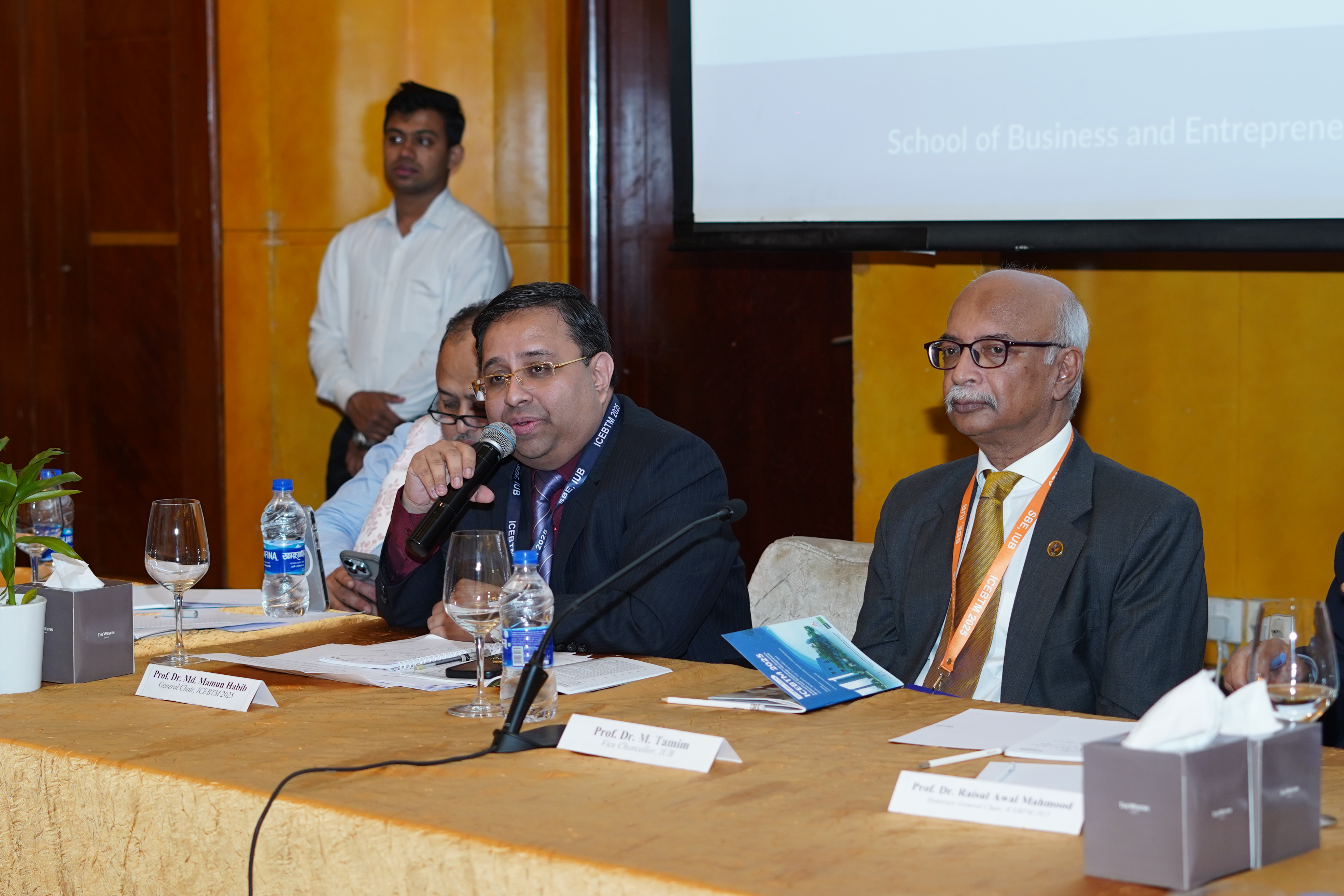
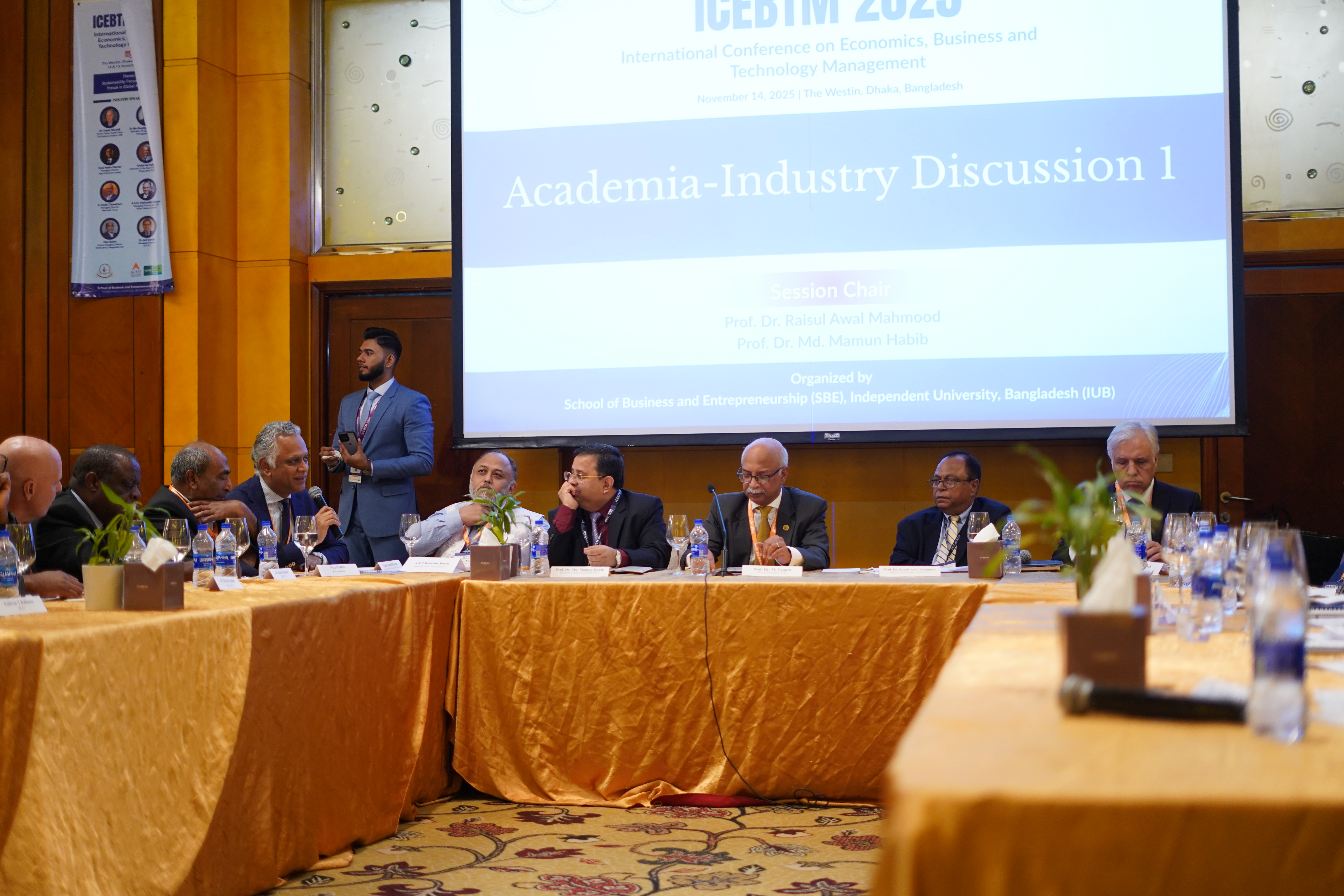
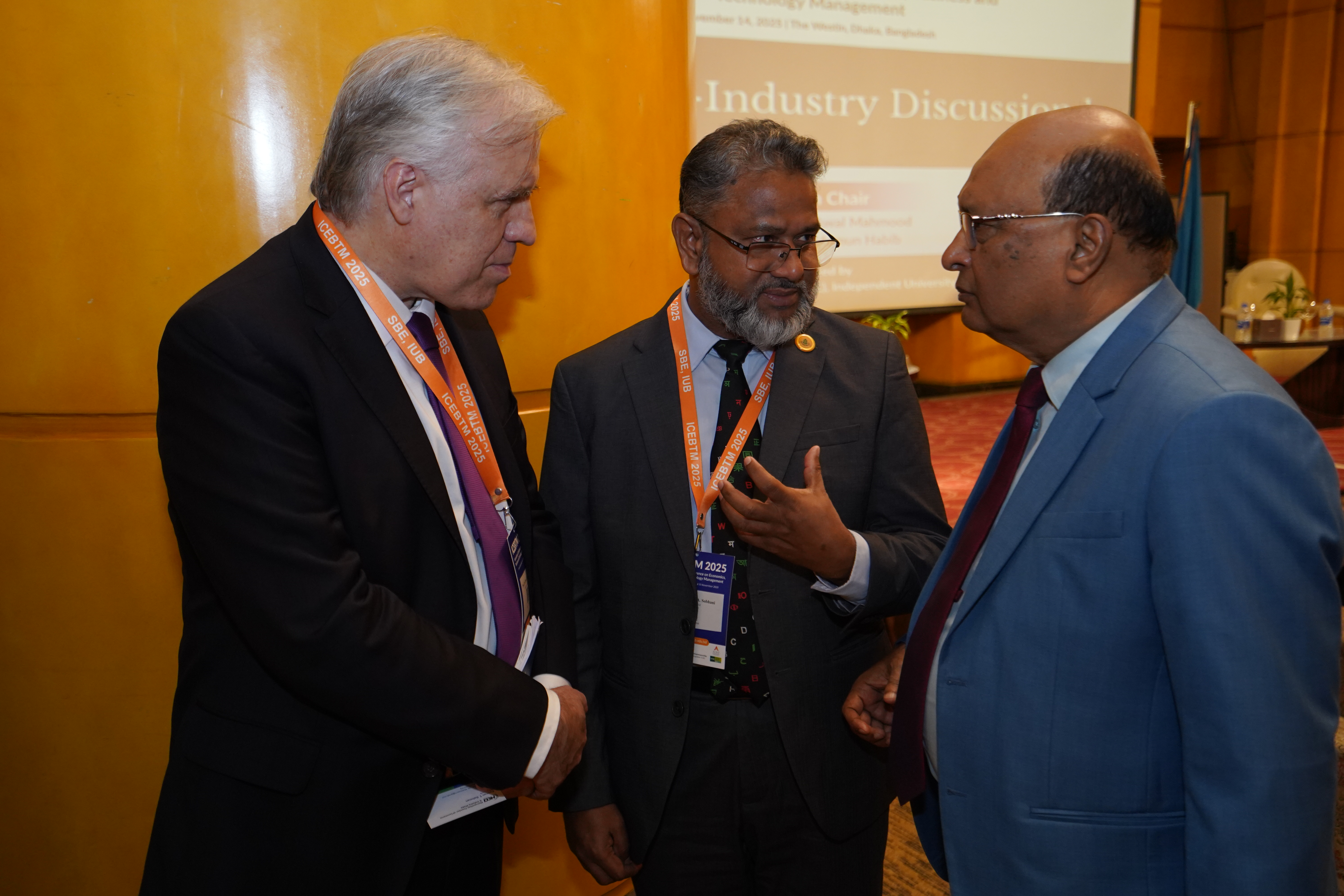
The first day of ICEBTM 2025 concluded with a significant Academia–Industry Dialogue bringing together distinguished panelists from academic institutions and industry sectors. The session was chaired by Prof. Dr. Raisul Awal Mahmood, Honorary General Chair of ICEBTM 2025, and Prof. Dr. Md. Mamun Habib, General Chair of ICEBTM 2025.
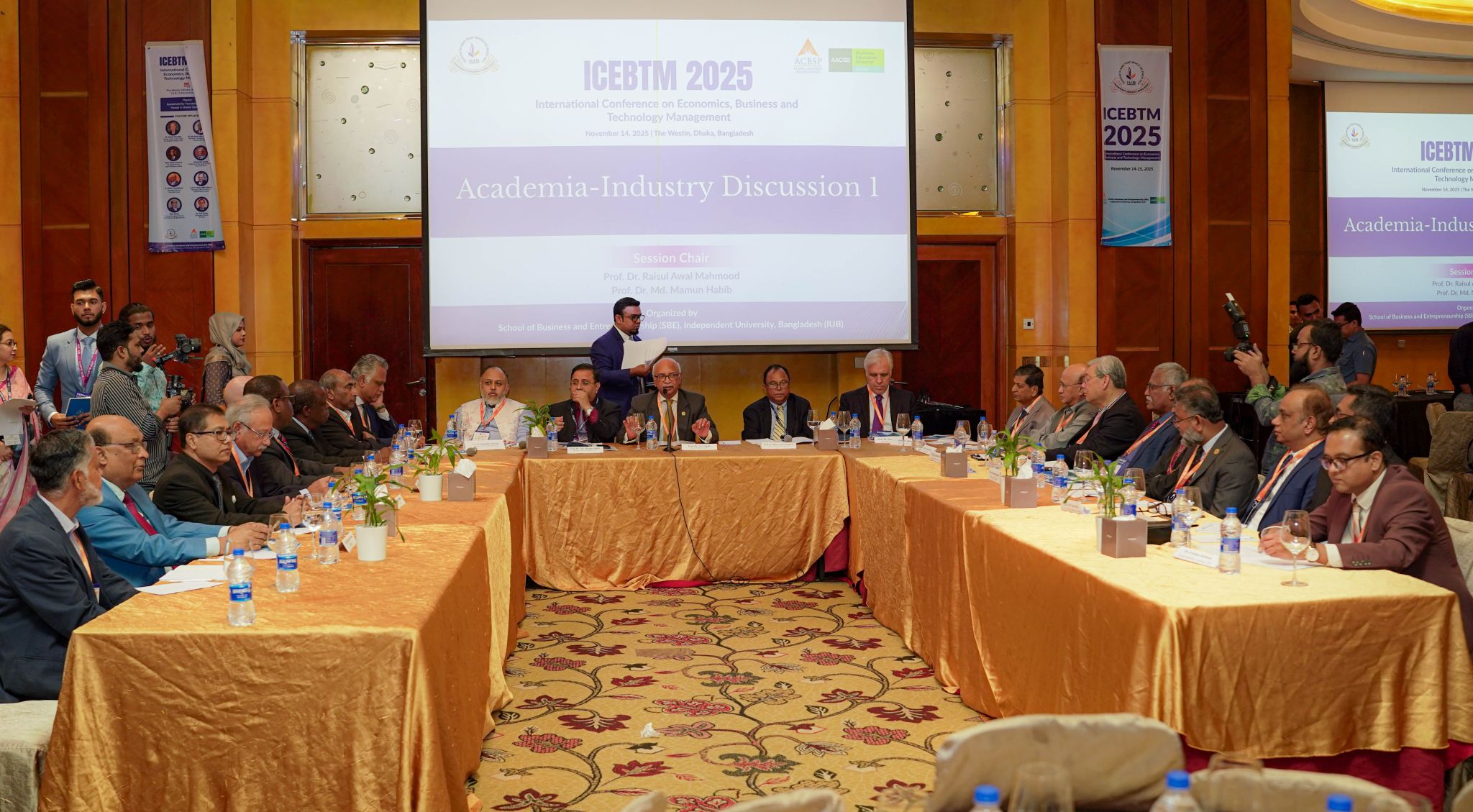
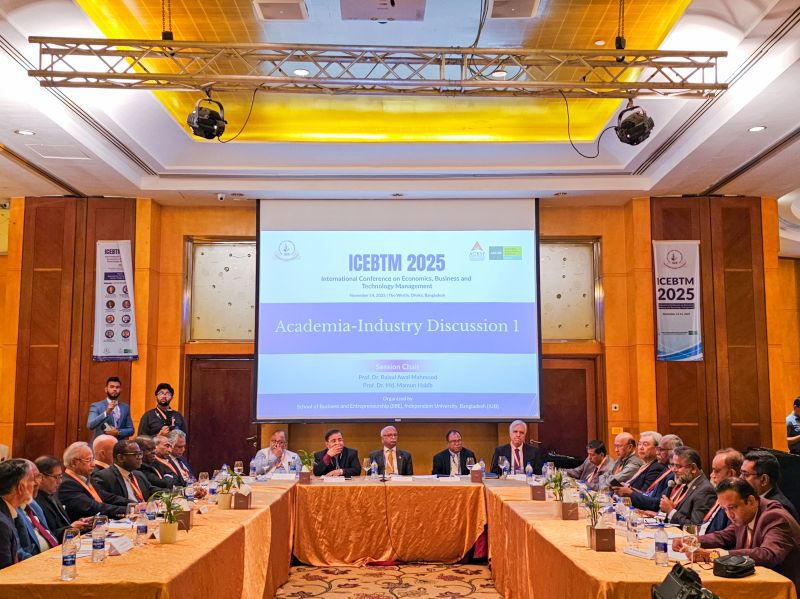
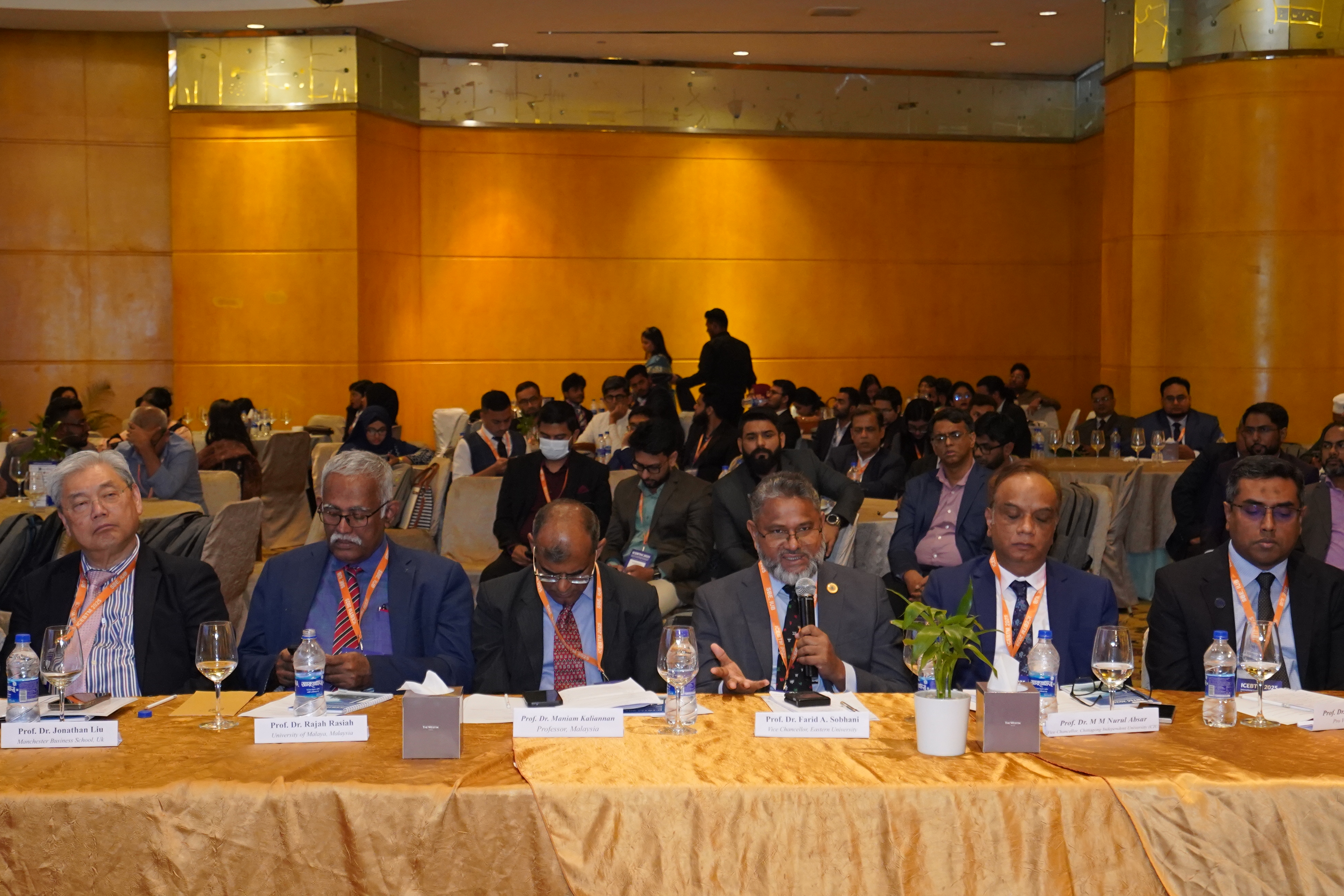
From academia, the participants included Prof. Dr. M. Tamim, Vice Chancellor, IUB; Prof. Dr. Daniel W. Lund, Pro Vice-Chancellor, IUB; Prof. Dr. Abdur Rab, Vice Chancellor, IUBAT; Prof. Dr. Ahmad Ahsan, Director, Policy Research Institute of Bangladesh; Prof. Dr. Jonathan Liu, Manchester Business School, UK; Prof. Dr. Rajah Rasiah, University of Malaya, Malaysia; Prof. Dr. Maniam Kaliannan, University of Nottingham, Malaysia; Prof. Dr. Farid A. Sobhani, Vice Chancellor, Eastern University; Prof. Dr. M. M. Nurul Absar, Vice Chancellor, Chittagong Independent University; Prof. Dr. Md. Abdur Rahman, Pro Vice-Chancellor, AIUB; Dr. Ferdoush Saleheen, UAE; Prof. Dr. Ruhul A. Salim, Curtin University Australia; and Dr. Ben Bvepfepfe, CILT, UK.
Representing the industry, the participants were Syed Nasim Manzur, Managing Director, Apex Footwear Limited; ASM Mainuddin Monem, CEO & Managing Director, Abdul Monem Group; Dr. Derek Westfall, Oregon State University, USA; Emeka Henry Egeson, Canada; Kamran T. Rahman, MCCI; Mirza Shajib Raihan, industry expert (AmCham); Dr. Md. Mosharrof Hossain, icddr,b; Niaz Rahim, Rahimafrooz.
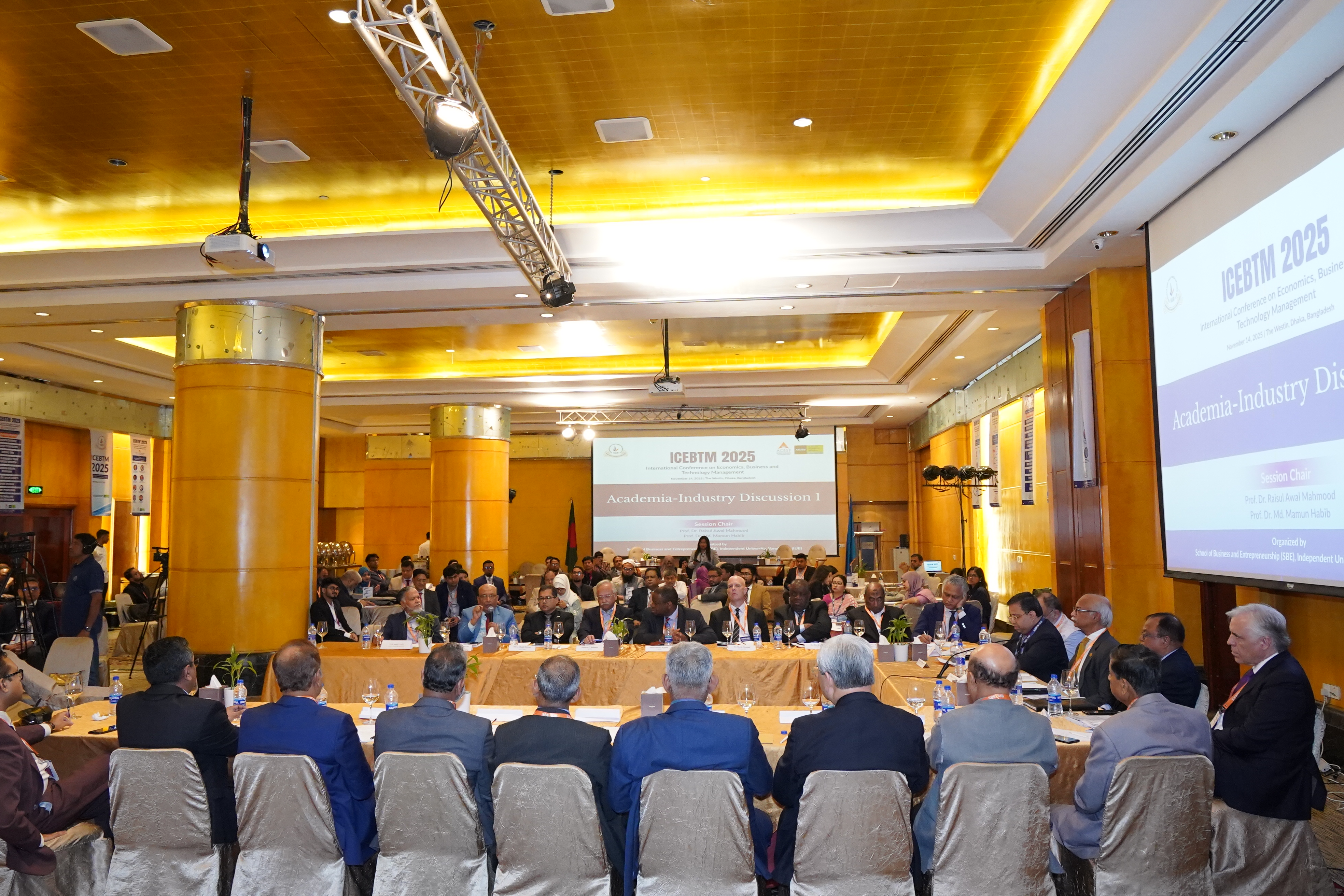

The session opened with remarks by Prof. Dr. M. Tamim, Vice Chancellor of IUB, who emphasized the need for concise and impactful discussions on industry-academia collaboration and to bring core issues to address the gap that prevails between industry and academia on meaningful research. He highlighted the importance of identifying areas for collaboration between academia and industry and encouraged both parties to focus on actionable solutions, as universities alone cannot produce solutions to modern-day problems. Prof. Dr. Md. Mamun Habib then initiated a dialogue on mitigating this gap that prevails between academia and industry, inviting Prof. Dr. Daniel W. Lund to share his insights. Prof. Lund, in his short take, further discussed the necessity of such kind of discussion as it helps industry to inform academia about the core competencies and skills required for graduates to get into the job market.
Prof. Dr. Raisul Awal Mahmood then asked Syed Nasim Manzur for his perspective on graduate readiness. Mr. Manzur emphasized the need to adopt a timely curriculum, incorporating soft skills such as critical thinking and problem solving, combining job-specific skills with essential literature, and highlighted concerns regarding deteriorating language skills and the inability of graduates to learn new languages effectively. Following this, Niaz Rahim discussed the importance of strategic business thinking and early adoption of emerging trends by the universities, when Dr. Mamun Habib asked the question about research sponsorship to academia by the industry.
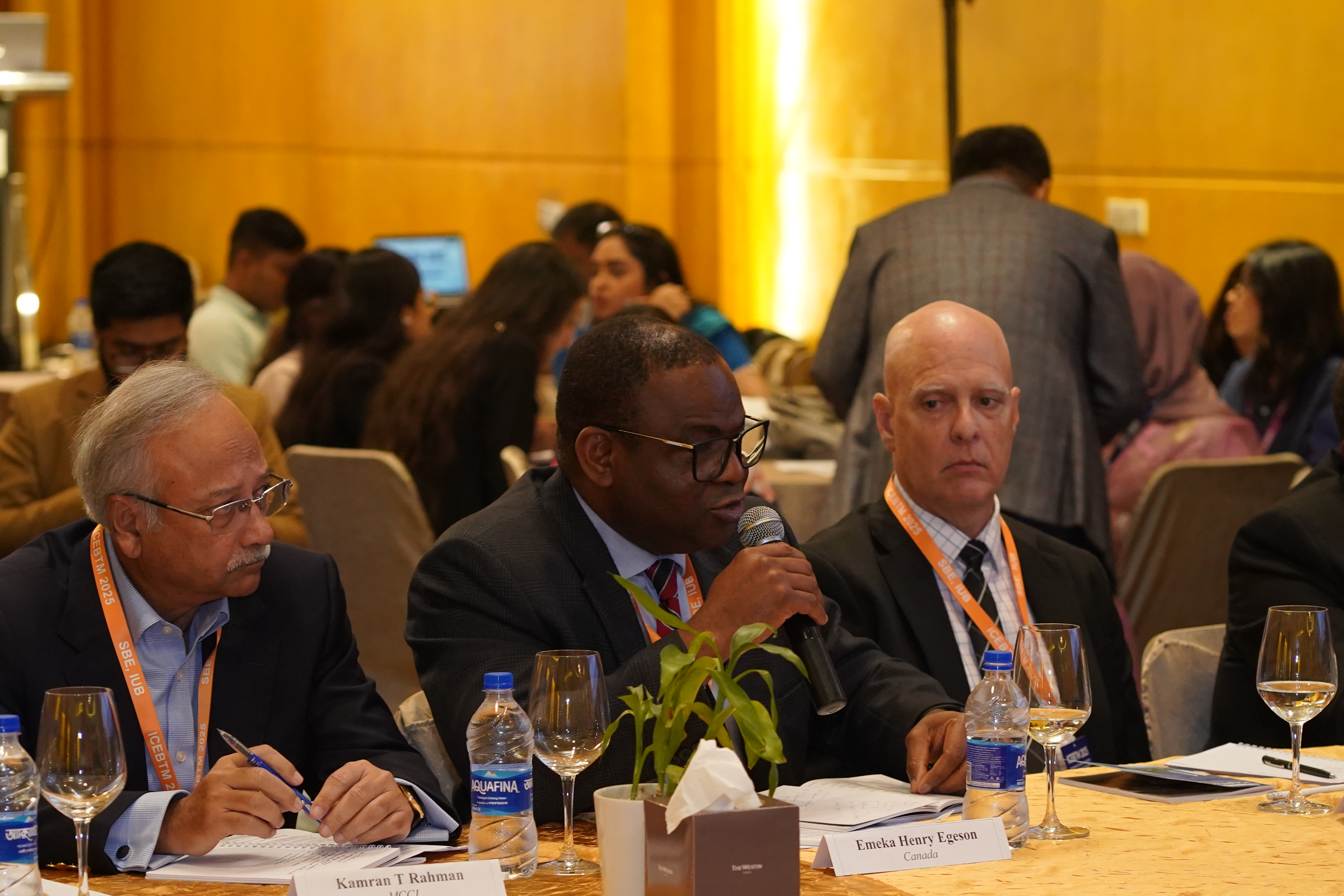
From the academic perspective, Prof. Dr. Abdur Rab highlighted the challenge of curriculum obsolescence, noting that students often learn outdated content that becomes irrelevant by graduation. He urged industries to provide actionable input on course outcomes. Dr. Emeka discussed common challenges faced by both Bangladesh and Canada, especially the struggle graduates face in securing suitable jobs. He emphasized the importance of developing strong skill sets and understanding the key elements of performance. He suggested that graduates would be more employable if academic programs focused more on practical skills and structured learning packages. Dr. Saleheen compared Bangladesh’s education system with countries like the UAE, where even kindergarten students learn basic coding. He proposed six improvement measures for Bangladesh: stronger job-oriented skill development, more professional development courses, industry-linked academic programs, flexible entry pathways (such as allowing pharmaceutical qualifications without a full bachelor’s degree), increased external research, regular program evaluations every three months, and industry-certified training modules. Here, Dr. M. Tamim added the necessity for a national vision of long-term development.
Regarding the question on how industries should access and communicate the needs of manpower from academia, Dr. Ahmed Ahsan said that there are two core gaps between academia and industry: skill gap and research gap. He started with an example where employers could only recruit 900 people from a job fair, while they opted for 15000, reaffirming the lack of industry-ready graduates. While ASM Mainuddin Monem emphasized that universities must strengthen collaboration with industries, particularly in training, teamwork, and practical skill development. He shared his core philosophy on bridging the academia–industry gap: while industry focuses on solving real-world problems and meeting immediate needs, academia produces talent, conducts research, and drives innovation. In Bangladesh, he noted, these two sectors often operate in isolation, limiting national progress. For meaningful development, industry and academia must collaborate step by step, using real data, conducting applied research, and fostering talent in a symbiotic manner. He cited international examples, such as Singapore, where integrated efforts between universities and industry accelerated innovation and economic growth.
Prof. Dr. Jonathan Liu emphasized the necessity of long-term, government-led educational strategies and lifelong learning initiatives, noting that higher education alone cannot address rapid industry transformations. Karman T. Rahman emphasized the shared ownership of academia and industry collaboration. Mirza Sajib Rahman mentioned the industry collaboration they are offering through AmCham. Prof. Dr. Farid A. Sobhani expressed his skepticism about the necessity of having 116 private universities in Bangladesh and emphasized that the government should be more strategic while planning. He called for following the footsteps of the top-ranked universities of the world to contribute more to society. Prof. Dr. Rajah Rasiah addressed the question of how universities can contribute to industry. He explained that universities add value by generating new knowledge through research and by producing graduates who are ready to meet industry requirements. He emphasized that collaboration between universities and industries allows companies to access advanced knowledge and innovations.
Prof. Dr. Maniam Kaliannan approached the discussion from a philosophical perspective, asking, “What is the purpose of a university?” He criticized Outcome-Based Education (OBE), arguing that it cannot keep pace with rapidly evolving industry demands. He stressed that the broader educational ecosystem is undergoing transformation, requiring stronger engagement with industry. Dr. Md. Mosharrof Hossain highlighted the widening competence gap among new graduates in Bangladesh. Drawing on 25 years of HR experience and advanced education abroad, he noted that although academia–industry collaboration is frequently discussed, little actionable progress has been made. Dr. Derek Westfall emphasized the need for academia–industry collaboration to ensure research and graduates address real-world challenges.
Dr. Ben Bvepfepfe stressed aligning university programs with labor-market needs, cultivating practical skills and adaptability in students. Prof. Dr. Ruhul Selim encouraged universities to proactively engage industry leaders in curriculum development, while Prof. Dr. M M Nurul Absar stressed leveraging industry resources for digital transformation and student training. Citing Grameenphone’s journey in Bangladesh. Prof. Dr. Md. Abdur Rahman discussed how feedback from alumni and industry leaders has been incorporated into industrial programs at AIUB. He urged industries to provide actionable input on course outcomes to make academic programs more aligned with current market needs.

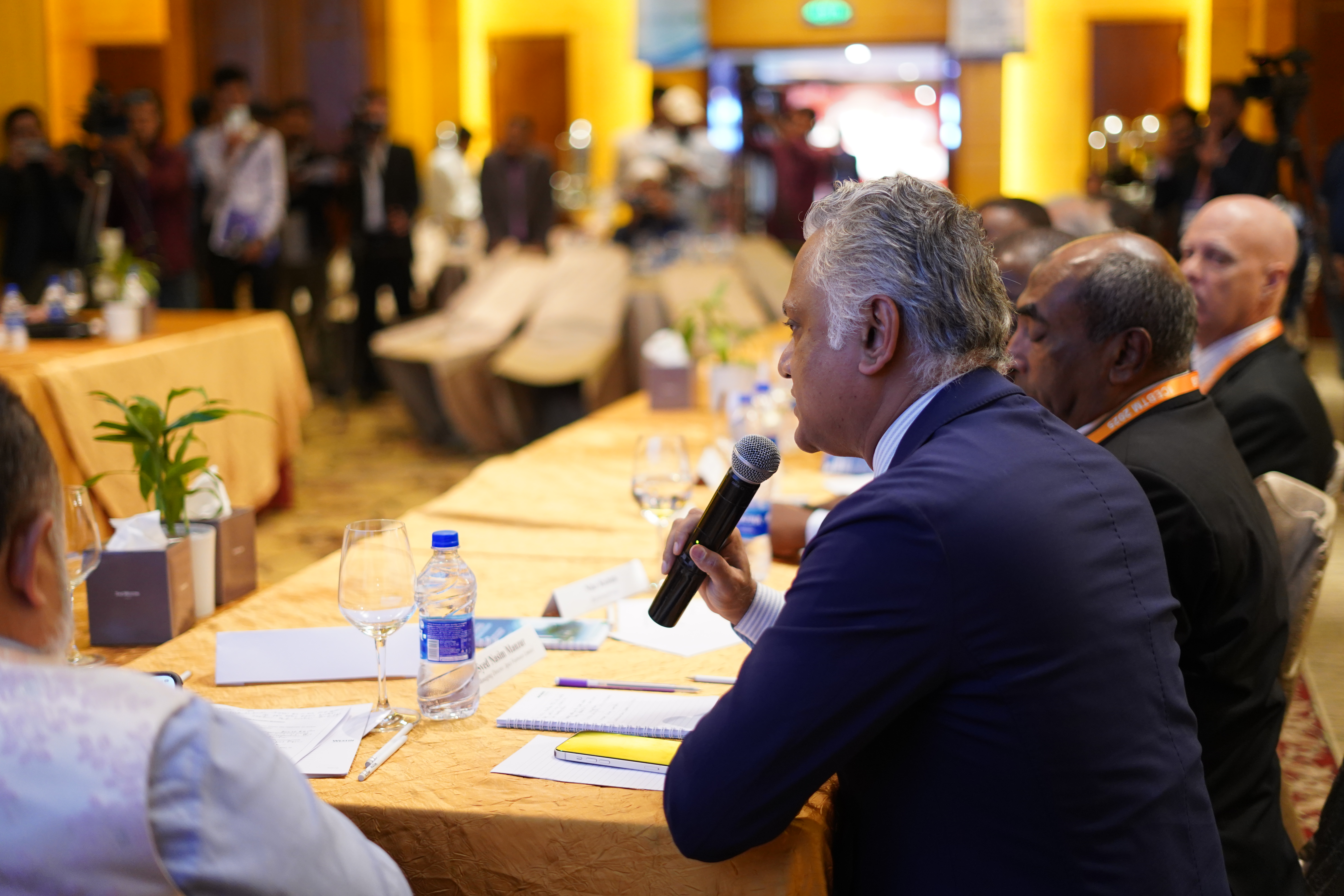
The discussion continued with Prof. Dr. Ahmad Ahsan highlighting persistent skills mismatches and limited communication between industry and academia. ASM Mainuddin Monem noted that academia often lacks practical competencies, and meaningful collaboration is necessary for research to have a real-world impact. Prof. Dr. Jonathan Liu remarked that misalignment between academic output and industry needs is a global challenge, requiring coordinated efforts among government, industry, and educational institutions.
The session concluded with a consensus on transforming discussions into actionable initiatives. The chairs thanked all panelists for their contributions and reiterated ICEBTM 2025’s commitment to advancing academia–industry partnerships for sustainable development and future-ready education. Following the session, all participants and guests were invited to dinner, providing an opportunity for further networking and collaboration.
Facebook: https://www.facebook.com/share/p/17P62ECf1s/
LinkedIn: https://www.linkedin.com/feed/update/urn:li:activity:7395125519068913665
YouTube: https://www.youtube.com/live/zvyuLYEcZQ0?si=1I3BXf5OBtHl6FSA
Go Back