Academia-Industry Discussion (2)
Academia–Industry Discussion 2
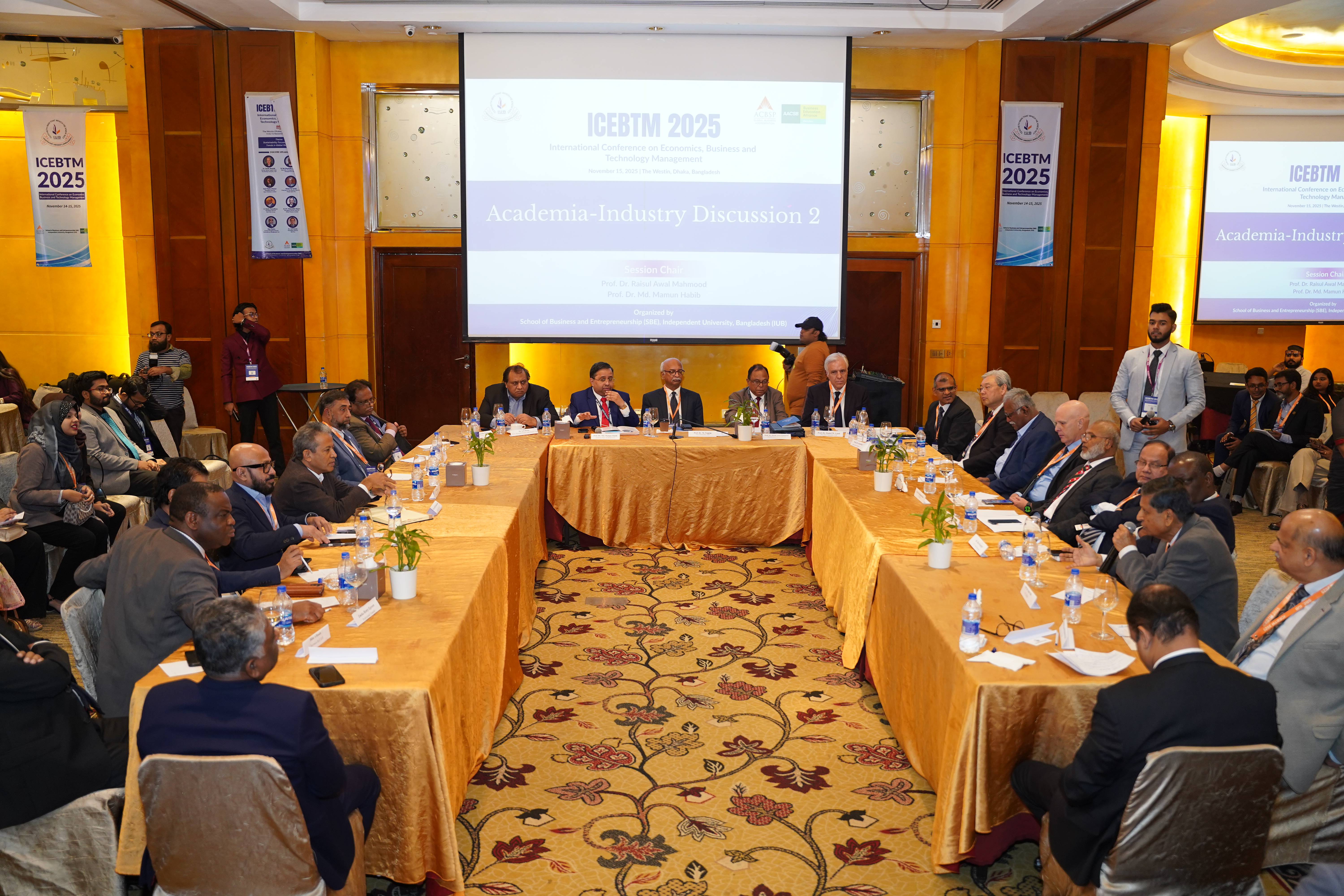
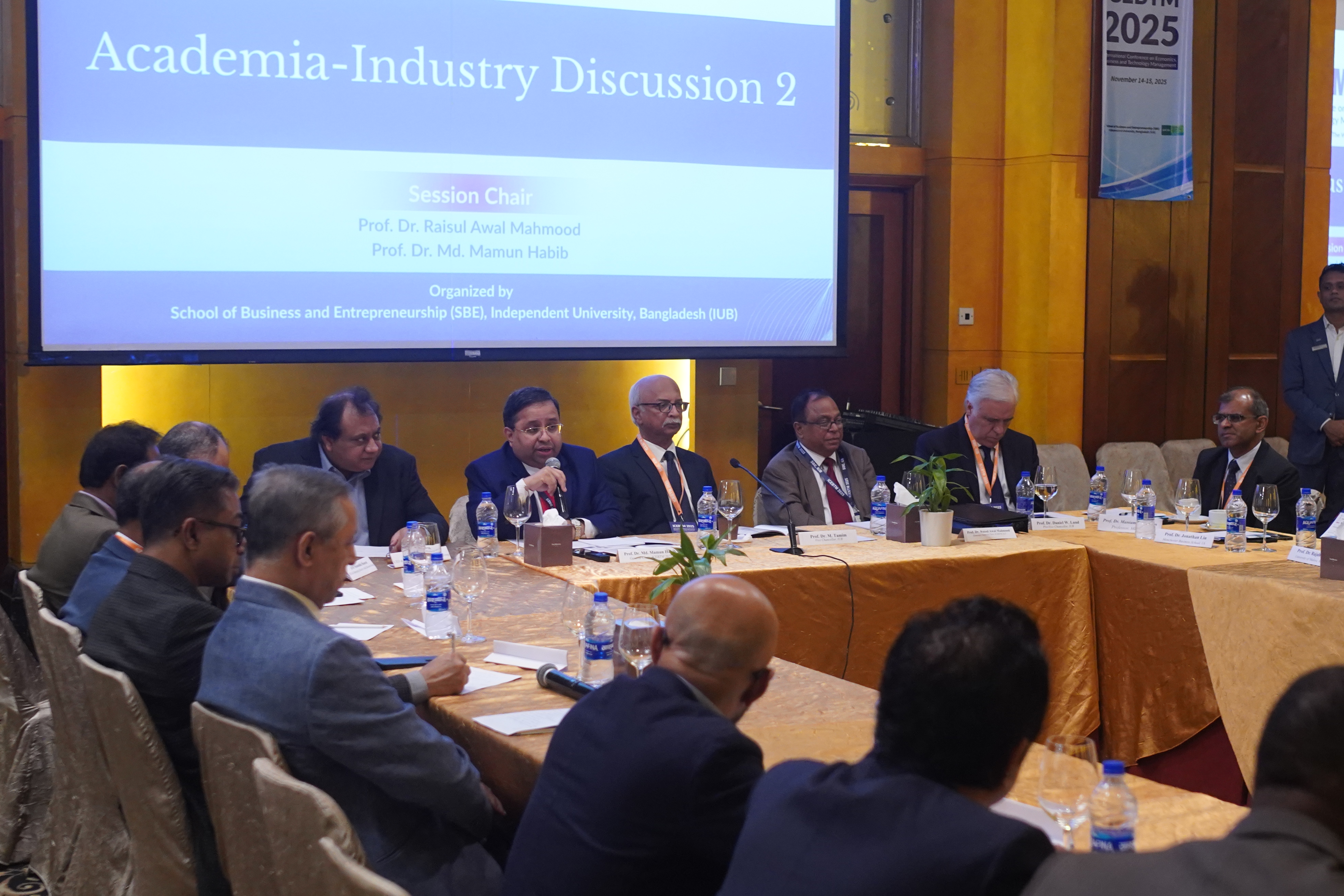
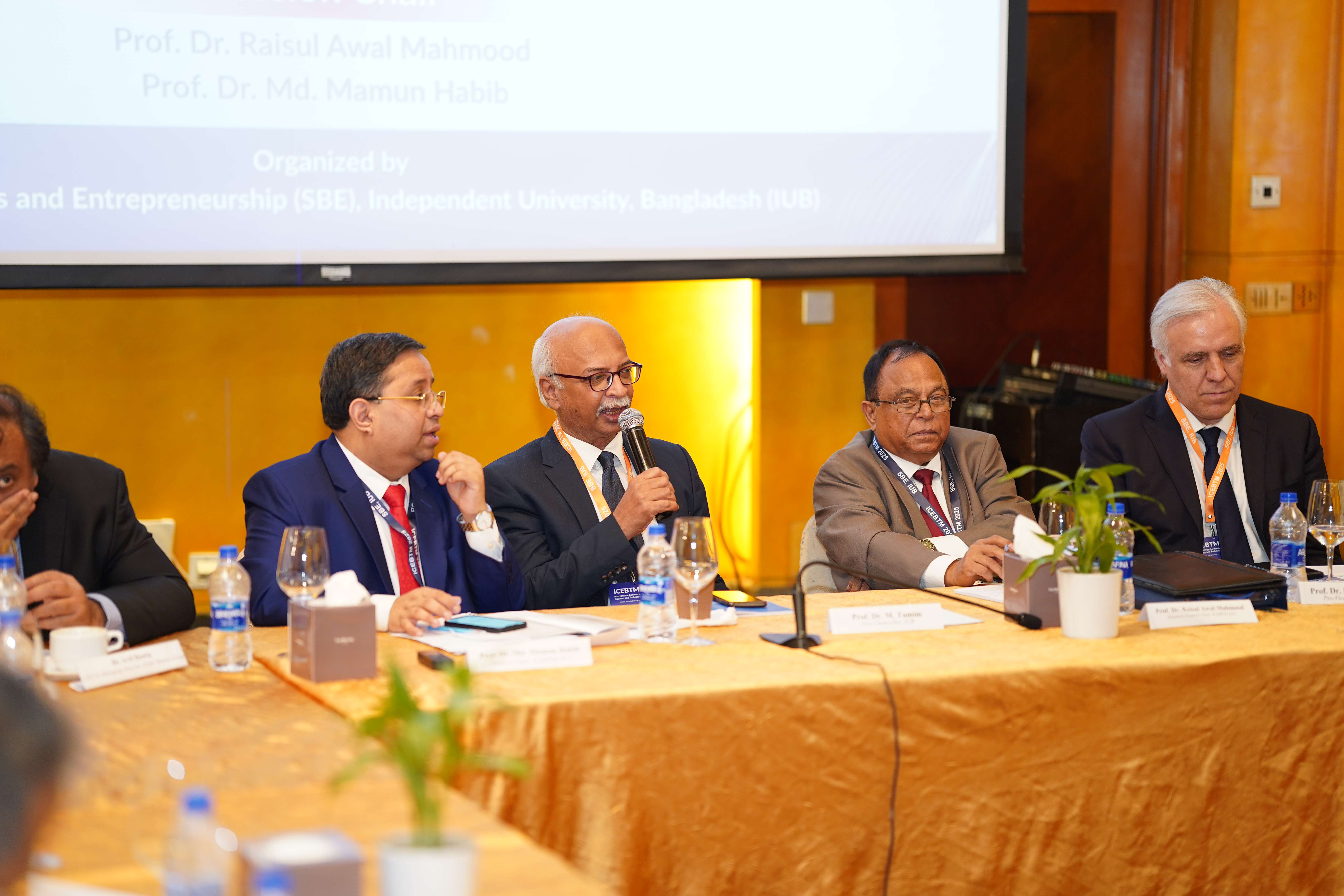
The final Academia–Industry Discussion of ICEBTM 2025 opened with an introduction of Prof. Dr. Md. Mamun Habib by the hosts, setting the stage for a comprehensive dialogue on bridging the persistent gap between academia and industry in Bangladesh. As session chair, Prof. Habib invited distinguished speakers to share their perspectives on current challenges and emerging opportunities. Vice Chancellor Prof. Dr. M. Tamim highlighted critical concerns about graduate readiness, noting deficiencies in soft skills, communication, and behavioral confidence, alongside the limited research infrastructure within industries. He emphasized the government’s pivotal role in defining national development priorities and aligning research initiatives with strategic needs.
Pro Vice Chancellor Prof. Dr. Daniel W. Lund underscored the importance of establishing meaningful and purpose-driven goals for collaboration. Prof. Dr. Jonathan Liu and Prof. Dr. Rajah Rasiah reflected on international experiences, emphasizing the benefits of structured research strategies and technology adoption to enhance industrial competitiveness. Dr. Derek Westfall and Dr. Ben Bvepfepfe highlighted global trends in corporate engagement with academia, advocating for increased industry investment in doctoral research and collaborative initiatives.
Prof. Dr. Yousuf Mahbubul Islam stressed that impactful research begins with clear identification of gaps and long-term planning, citing examples of companies that strategically forecast skill needs over multiple years. Prof. Dr. Shahjahan Khan emphasized promoting a research culture across institutions through stronger cooperation, collaboration, and funding. From the industry perspective, Kabir Ahmed of BAFFA discussed operational challenges within sectors such as shipping and recommended a one-year professional attachment for students to enhance practical readiness.
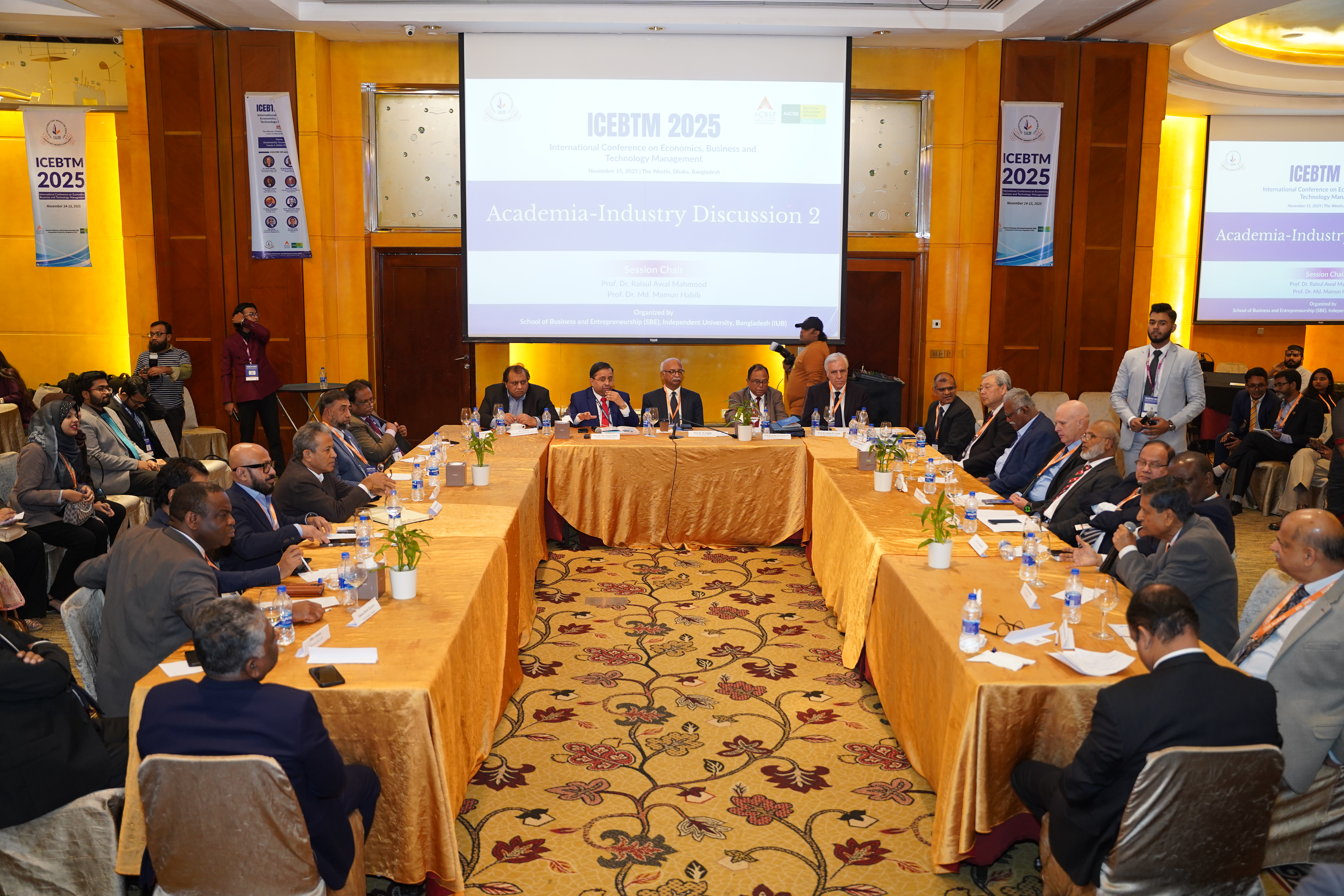
Prof. Dr. Md. Sarder highlighted that U.S. companies invest in structured six-month training programs to bridge skill gaps a model that could benefit Bangladesh. Prof. Dr. Mahbubur Rahman noted that disparities between Bangladesh and the United States arise from gaps in academic investment, research development, curriculum alignment, and practical training opportunities. Rezwanul Kabeer of Energypac addressed the growing unemployment crisis, citing widespread downsizing and rising industry expectations, stressing the need for stronger academia–industry collaboration.
The extended discussion continued under the facilitation of Prof. Dr. Raisul Awal Mahmud and Prof. Dr. Md. Mamun Habib, with participants including Prof. Dr. Maniam Kaliannan, Prof. Dr. Abdur Rab, Prof. Dr. Nazrul Islam, Prof. Dr. AKM Waresul Karim, Prof. Dr. Akhter Hossain, Mr. Didar A. Husain, Mr. ASM Mainuddin Monem, Dr. Arif Dowla, Mr. Emeka Henry Egeson, Dr. Ferdous Saleheen, and A. Gafur. Speakers examined structural and policy-level reforms required to strengthen national competitiveness. Prof. Nazrul Islam emphasized skill mapping, R&D investment, and three-way partnerships among academia, industry, and government.
ASM Abdul Monem and A. Gafur highlighted the importance of return on investment and trust-based collaboration. Prof. Dr. Akhter Hossain pointed to barriers caused by misaligned expectations, operational hurdles, and the need for academia to better understand industry-oriented research. Prof. Dr. AKM Waresul Karim provided practical examples from the banking sector, advocating for curriculum modernization to enhance employability. Mr. Didar A. Husain highlighted the importance of ethical standards, long-term planning, and shared responsibility between universities and industries. Dr. Arif Dowla stressed integrating research priorities with business challenges, while Mr. Emeka Henry Egeson and Dr. Ferdous Saleheen emphasized innovation-driven collaboration.
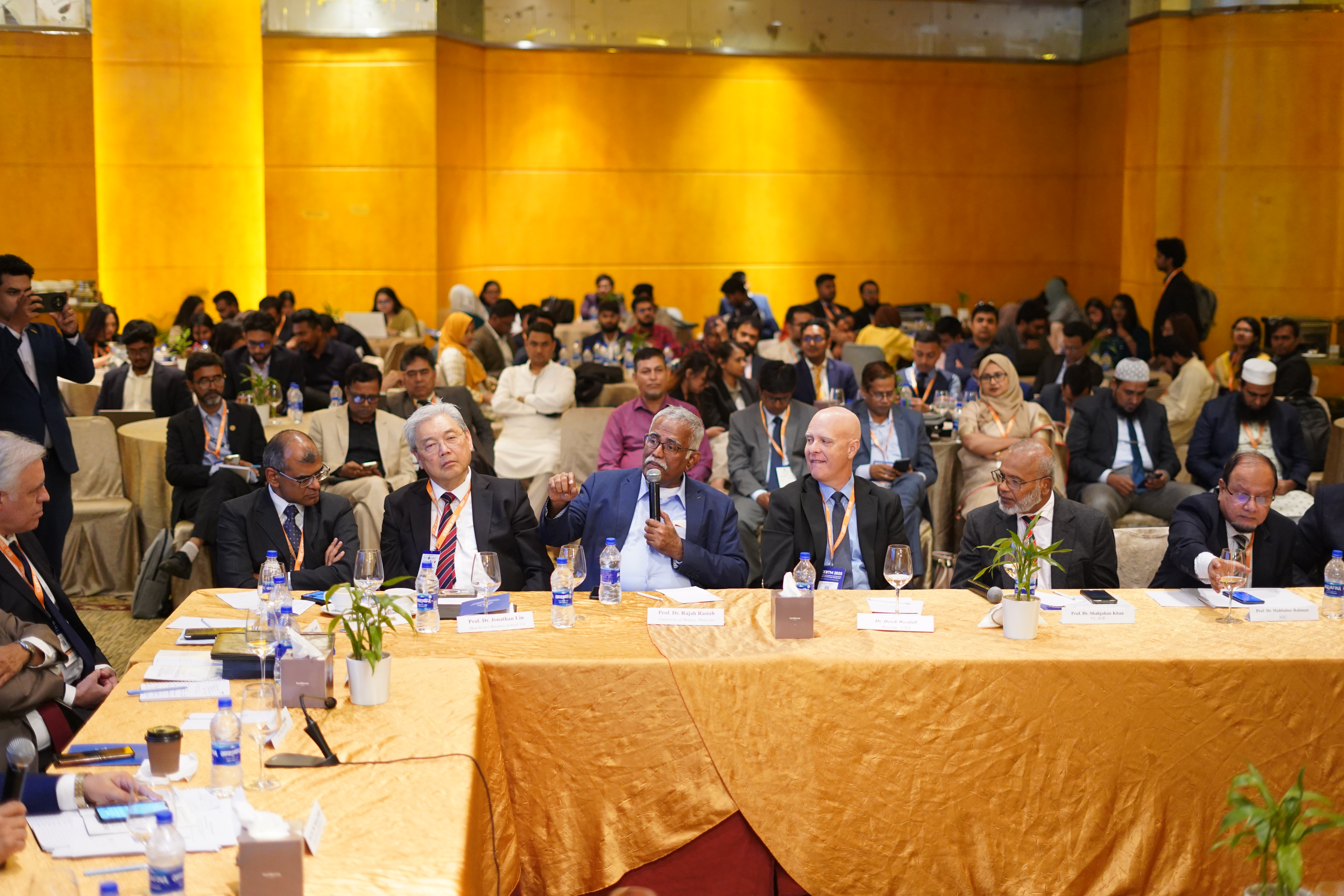
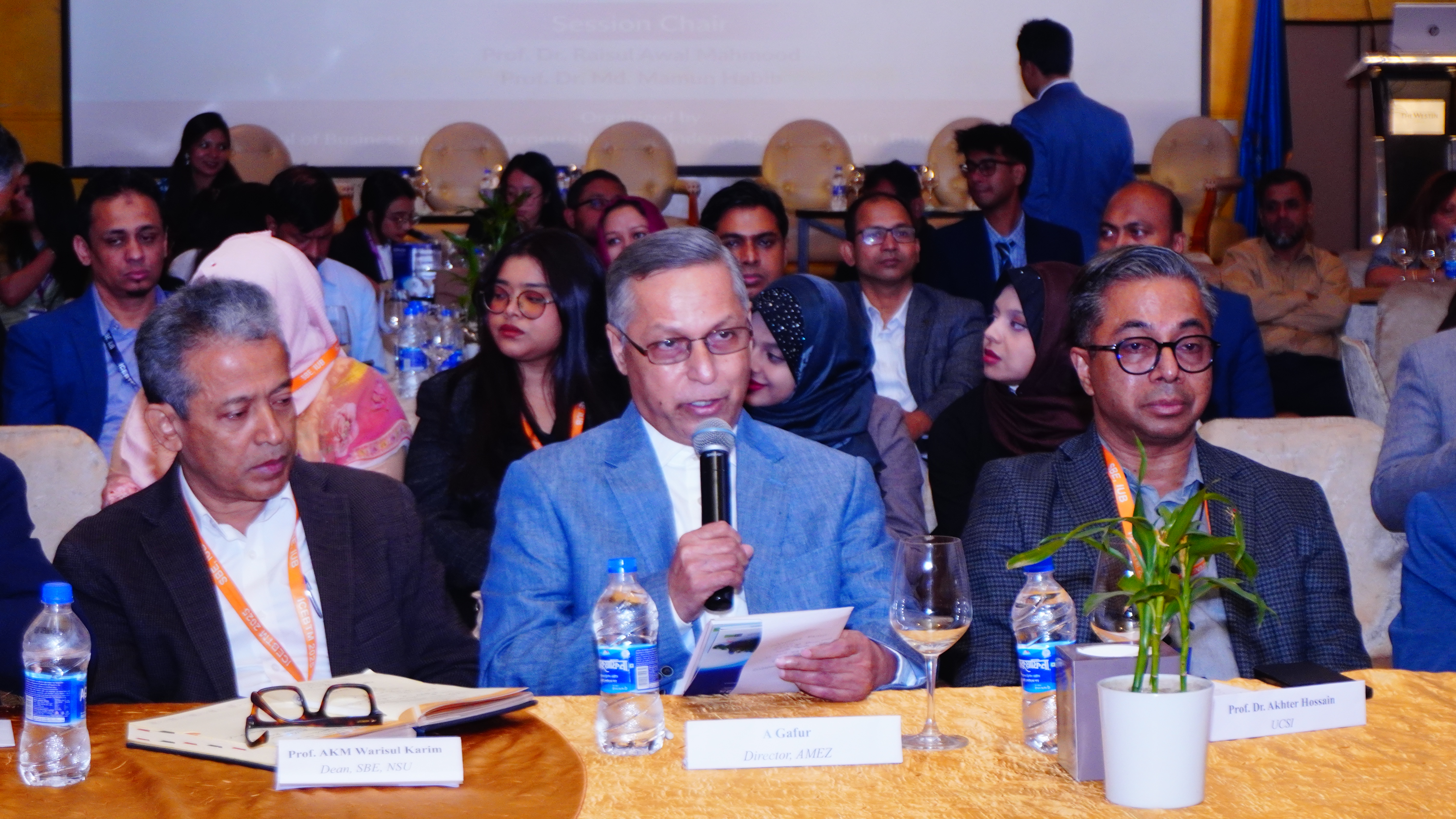
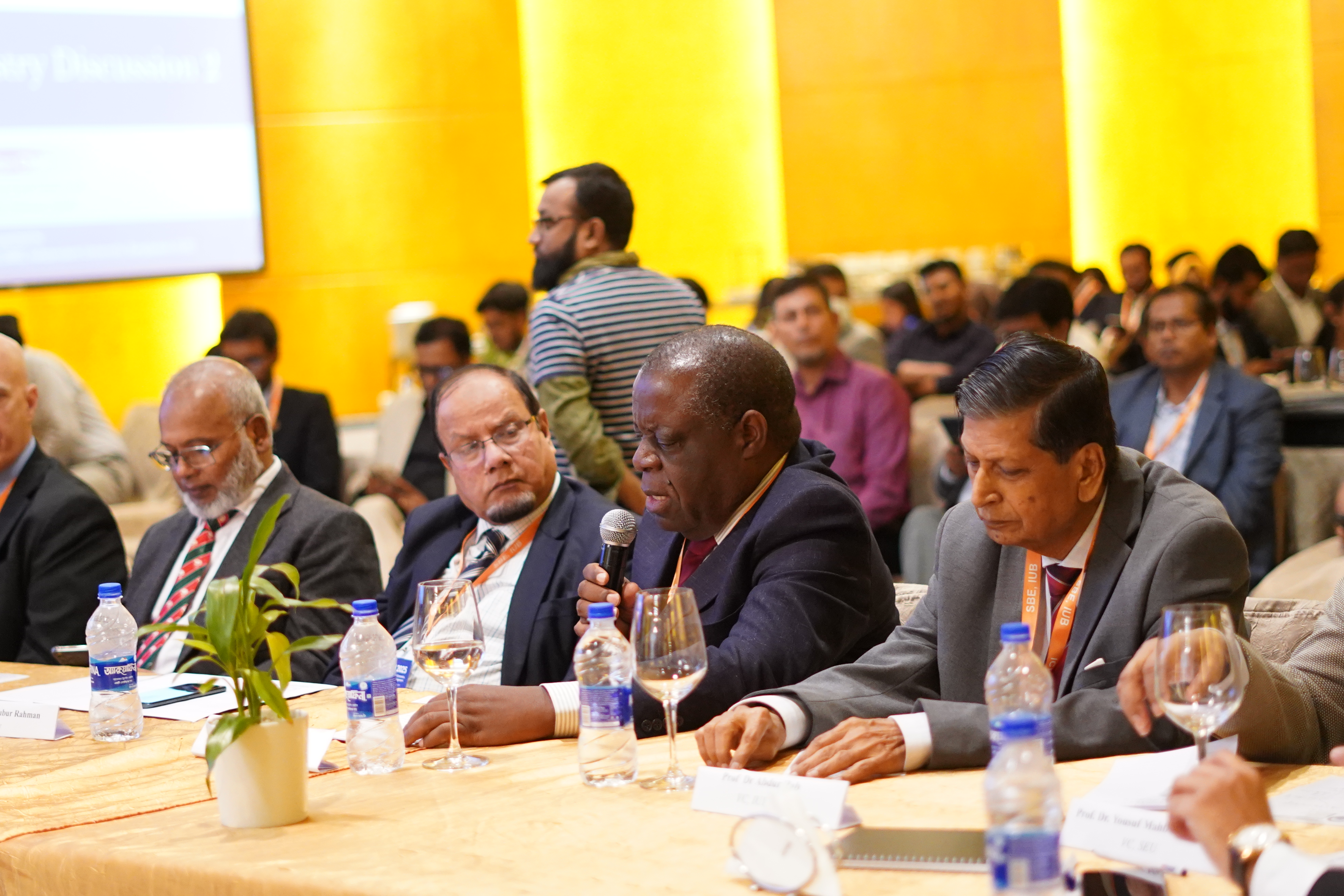
The discussion also covered broader policy and societal concerns. Participants stressed the need for institutional reform, investments in education, healthcare, and women-focused initiatives, and opportunities for international exposure. The banking sector was analyzed by Mr. AKM Shahnawaj, MD, Dhaka Bank PLC for disparities in service coverage and financial strength, illustrating how economic structures shape workforce requirements. In concluding reflections, attendees agreed that addressing the academia–industry gap requires coordinated action: universities must prioritize employability, skill mapping, and modernized curricula, while industries must overcome communication barriers and commit to sustained R&D collaboration.
The Q&A session raised critical questions on how academia perceives business priorities, students’ readiness for industry requirements, the relevance of existing textbooks, and how universities, centers of knowledge rather than vocational training, can better prepare students for professional environments. Discussions further highlighted the need to shift student mindsets from job seeking to entrepreneurship and job creation, reinforcing the overarching theme that national development depends on aligning academic expertise with industry expectations through strategic policy support, financial investment, and collaborative commitment.
Facebook: https://www.facebook.com/share/p/1BkkW5Me9x/
LinkedIn: https://www.linkedin.com/feed/update/urn:li:activity:7395670825674207232
YouTube: [1] https://www.youtube.com/live/6UQ0-7aGZpg?si=PGopxFIw4aY3qVp3
[2] https://www.youtube.com/live/gtLoE1sb5NI?si=yOOPgBNEXPVgffVS