Industry Talk (5) & (6)
Industry Talk (5 & 6)
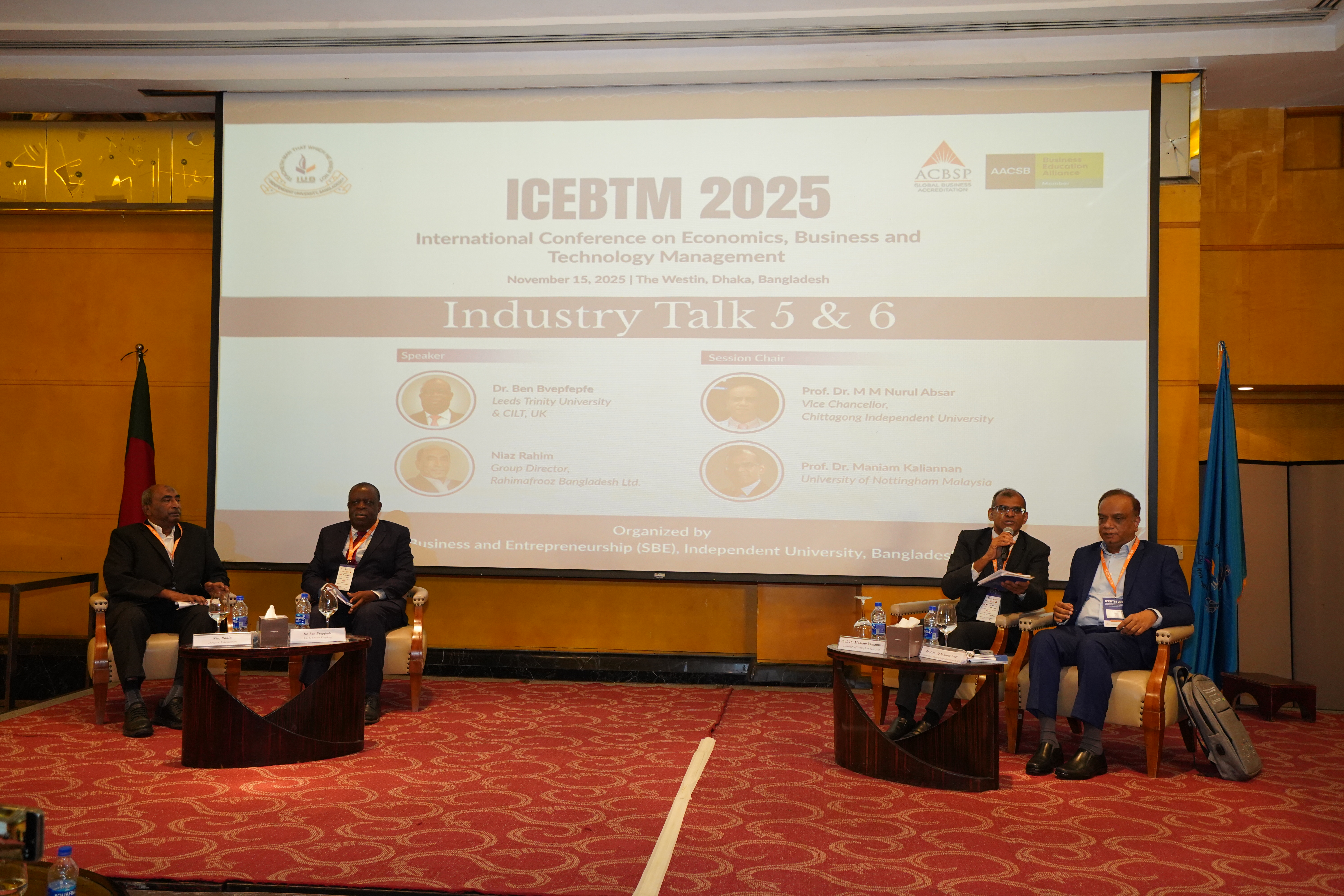
The Industry Talk sessions (5 and 6) of ICEBTM 2025 were held on the second day of the conference at The Westin, Dhaka. Organized by the School of Business and Entrepreneurship (SBE) of Independent University, Bangladesh (IUB), the sessions featured two distinguished speakers, including Dr. Ben Bvepfepfe of Leeds Trinity University and CILT, UK, and Mr. Niaz Rahim, Group Director of Rahimafrooz Bangladesh Ltd. The discussion was jointly chaired by Prof. Dr. M. M. Nurul Absar, Vice Chancellor of Chittagong Independent University, and Prof. Dr. Maniam Kaliannan of the University of Nottingham Malaysia. After a brief introduction by the host, Prof. Kaliannan opened the session by highlighting contemporary corporate and economic challenges and then invited Dr. Ben to deliver his talk titled “Corporate Social Responsibility (CSR) Drivers, Influences, and Initiatives.”
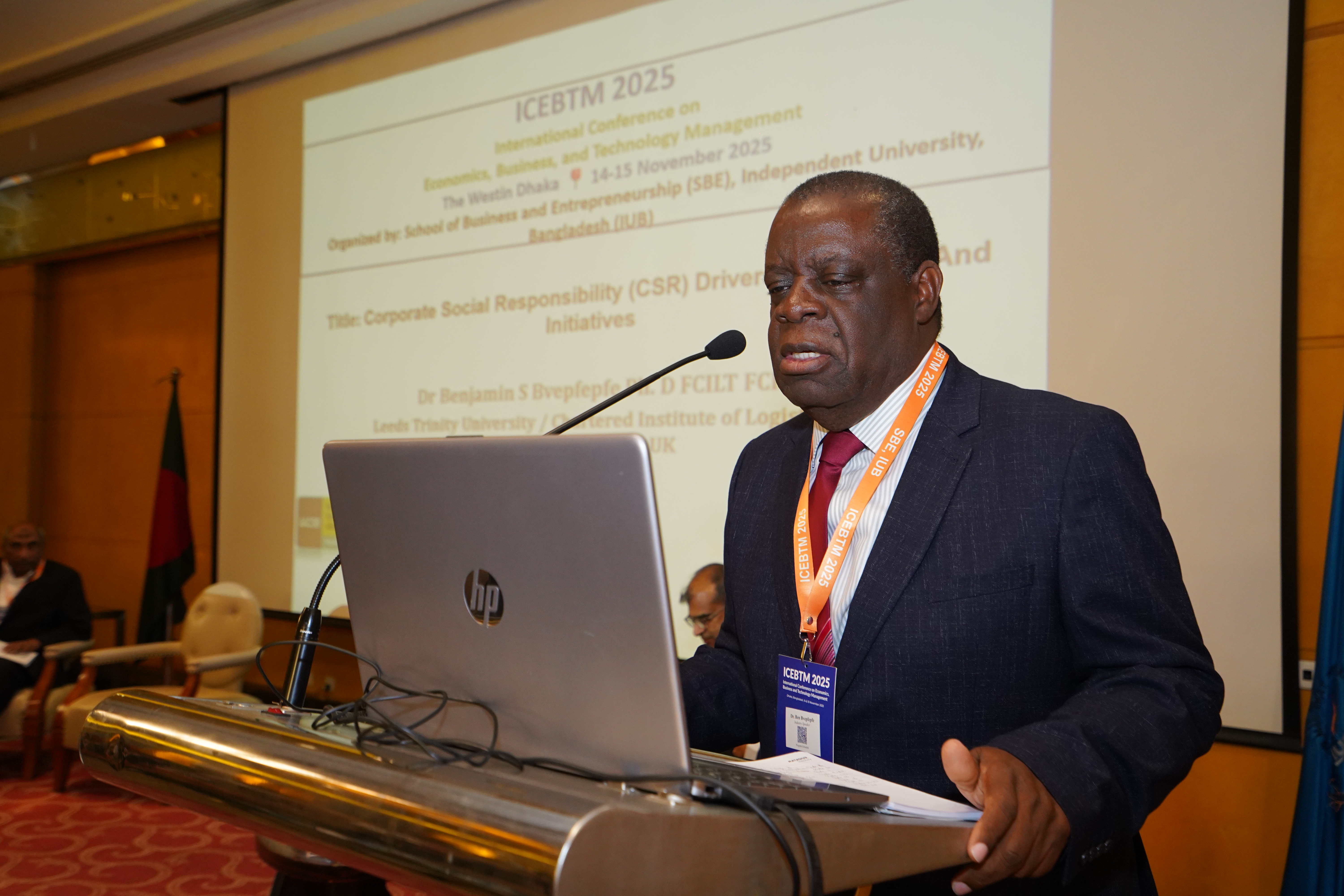
In his presentation, Dr. Ben explored the expanding significance of CSR within the global corporate environment. He explained that CSR now forms a vital link between business behavior and societal expectations, particularly in contexts where social and environmental stability influence corporate decisions. Tracing the evolution of the CSR debate, he noted that businesses increasingly acknowledge CSR not only as an ethical obligation but also as a strategic component of organizational governance, describing it as “an item in the boardroom agenda.” He emphasized that as multinational supply chains extend across different countries, firms must remain attentive to institutional variations, regulatory systems, and stakeholder demands that shape CSR practices.
Dr. Ben presented a conceptual model to illustrate how institutional settings structure CSR expectations, and he shared empirical findings demonstrating three main orientations within CSR: community-focused initiatives, stakeholder-driven activities, and environmental sustainability efforts. He concluded by stressing that CSR has become essential for organizations seeking legitimacy, competitiveness, and responsible engagement in the market.
Following this, Prof. Absar invited Mr. Niaz Rahim to speak on strengthening the relationship between academia and industry. Mr. Rahim began by expressing appreciation for IUB’s consistent efforts to collaborate with industry and emphasized that meaningful academic contribution depends on strong partnerships with corporate actors. He explained that the demand for skilled and adaptable labor is expanding rapidly, making it crucial for universities to develop students’ capabilities in alignment with industry needs. He described academia–industry collaboration as a “vital synergy” and argued that apprenticeship and internship-based models, widely used in countries such as China, offer cost-effective mechanisms for preparing students with practical competencies.
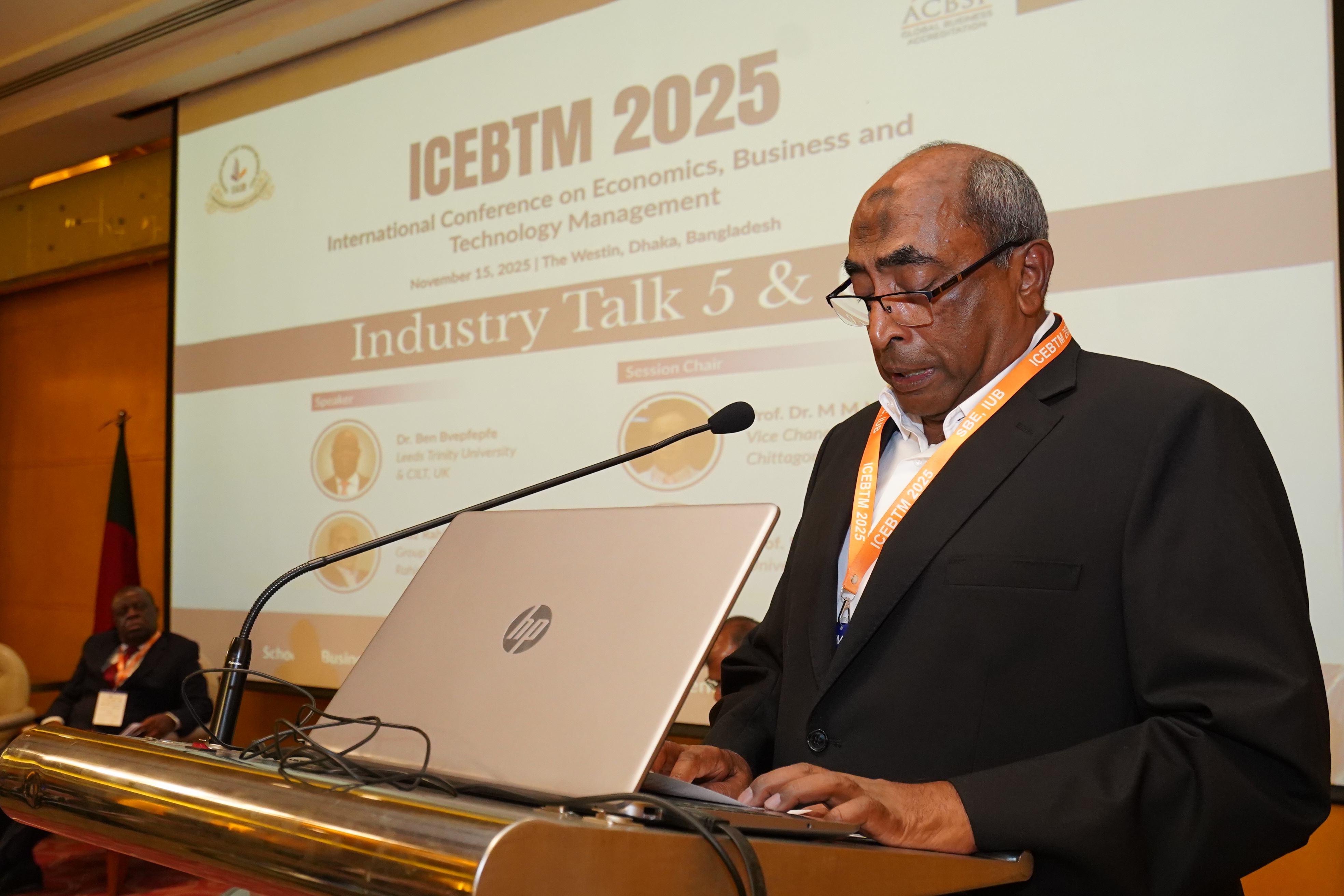
As examples of successful engagement, he highlighted Rahimafrooz’s partnership with BUET on solar energy projects and the development of a joint MBA program in agricultural entrepreneurship with AIUB. He also noted that Rahimafrooz maintains uncompromising ethical standards, ensuring high-quality service and responsible practices across its operations. Mr. Rahim stressed that closer collaboration between industry and universities is essential for national competitiveness and innovation, particularly as Bangladesh confronts evolving economic and sustainability challenges.
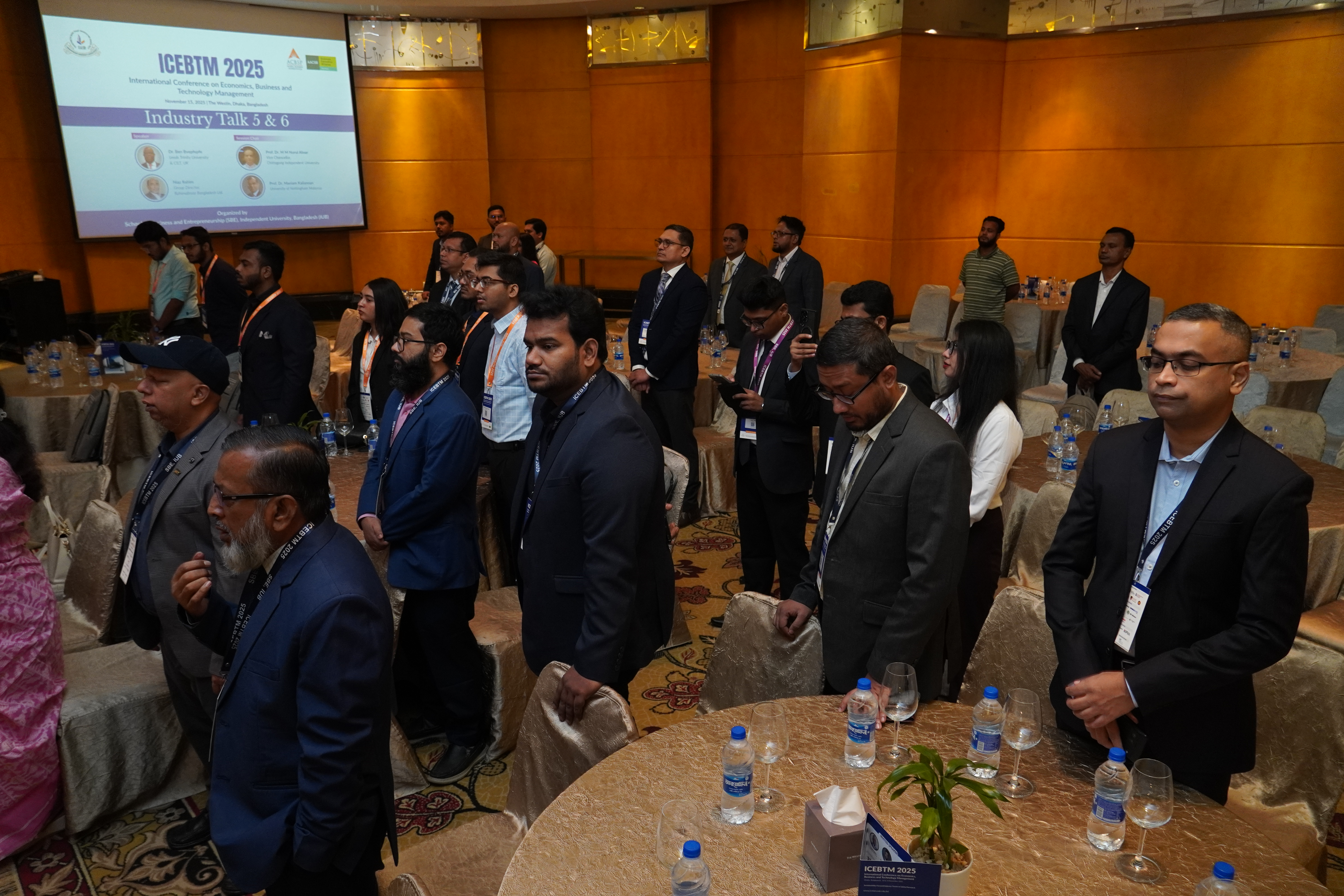
The session then moved into an interactive question-and-answer segment moderated by Prof. Absar. Participants raised questions regarding graduate employability, industry readiness, and the competitive landscape of local companies. In response to concerns about rising unemployment and challenges faced by undergraduates entering the workforce, Mr. Rahim encouraged universities to expand internship programs and ensure that academic curricula reflect real organizational needs. When asked how local companies such as Rahimafrooz remain competitive against multinational corporations, he attributed their success to an unwavering commitment to ethics, quality, and service excellence. Another participant asked Dr. Ben about the applicability of his CSR model within the Bangladeshi context. Dr. Ben replied that the success of any CSR framework depends on understanding the expectations of all stakeholders, including the government, and recognizing how institutional environments shape organizational responsibilities.
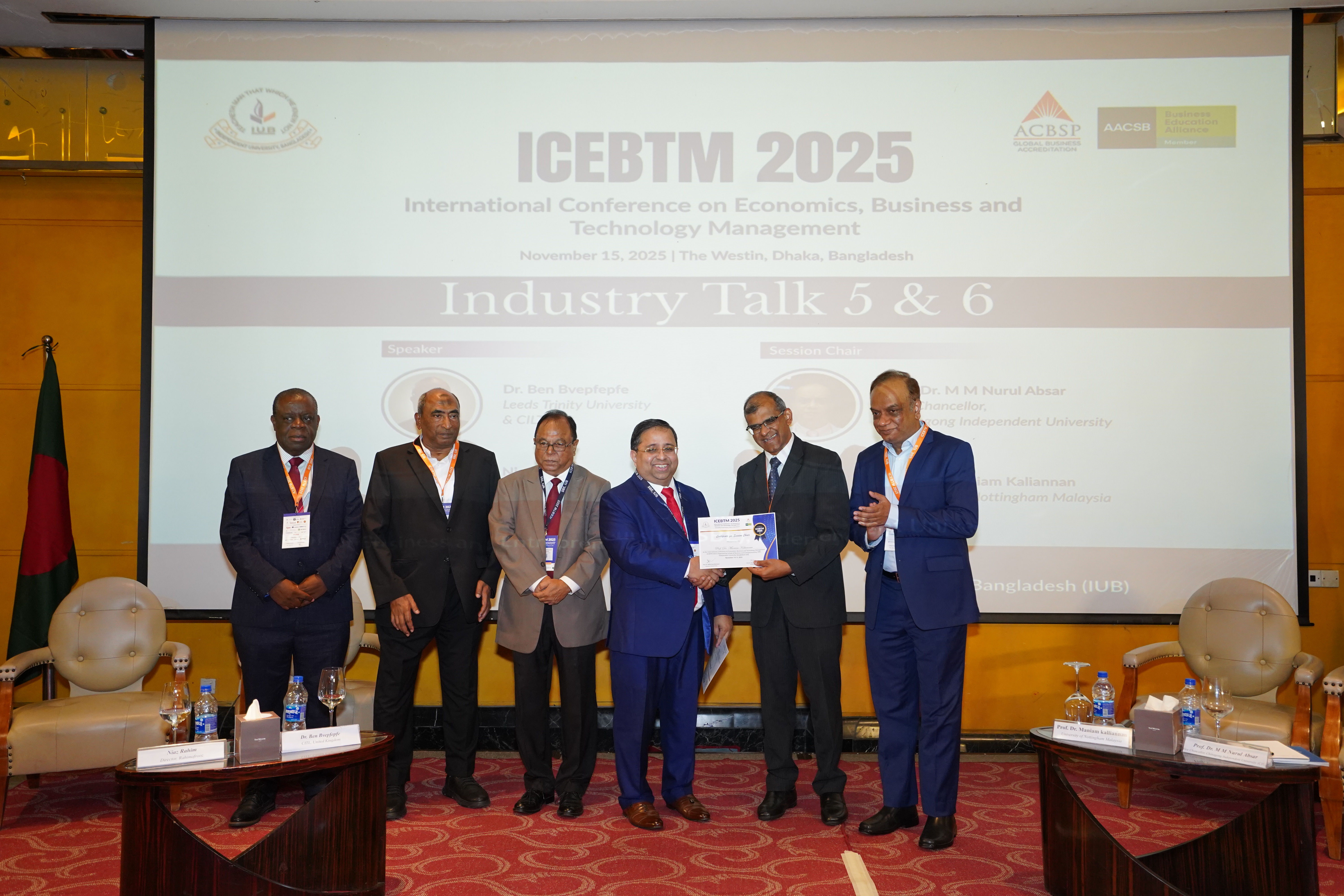
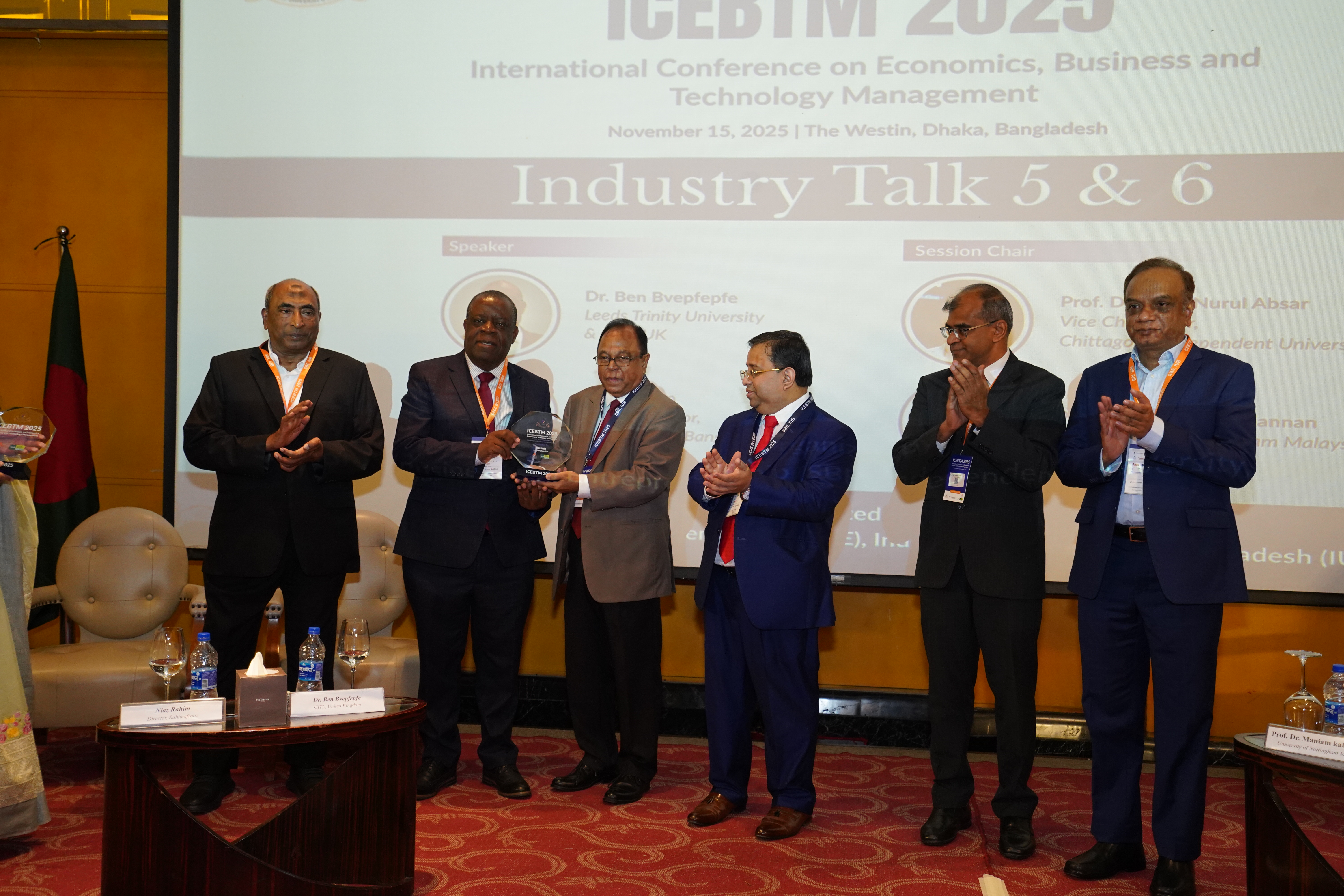
The session ended with the presentation of certificates and tokens of appreciation by Pro.f Dr. Raisul Awal Mahmood, Honorary General Chair of ICEBTM 2025. The Industry Talk effectively brought together academics and industry leaders for a rich discussion on the evolving nature of CSR, the importance of institutional drivers, and the growing need for robust academia industry partnerships to support Bangladesh’s sustainable economic growth.
Facebook: https://www.facebook.com/share/p/1PBrExoqdE/
LinkedIn: https://www.linkedin.com/feed/update/urn:li:activity:7395349681930825728
YouTube: [1] https://www.youtube.com/live/BKbv8cUB1eU?si=mikPnIJ2IGWx0-fq
[2] https://www.youtube.com/live/a8XAqzcgeQQ?si=CvLAz-437qsS4Jz1